Common Questions
FAQ: THE HARD QUESTIONS
The questions people actually ask about BPC-157 — answered from the peer-reviewed literature and official regulatory documents.
Is BPC-157 a legitimate research compound with peer-reviewed studies behind it?
Yes, with an important qualification. BPC-157 (sequence GEPPPGKPADDAGLV, MW 1419.5 Da) has an established molecular identity and a substantial body of peer-reviewed animal research published in indexed journals [1][2][3][4][5][6]. A 2025 HSS Journal systematic review identified 544 published BPC-157 articles from 1993 to 2024, with 36 focused on orthopaedic outcomes alone [16]. The findings across musculoskeletal, GI, and neurological rodent models are consistently favorable for BPC-157-treated groups. That makes it a legitimate object of preclinical research. What it is not is a legitimate therapeutic in the regulatory sense: only three small human pilot studies have been published, the one Phase II human trial in ulcerative colitis was never published in peer-reviewed form [8], and no regulatory authority has approved BPC-157 for any human indication. Legitimate research compound: yes. Approved medicine: no.
What does the published research actually show about BPC-157's mechanism of action?
BPC-157 engages multiple overlapping signaling cascades rather than a single molecular target [8]. The most studied are: (1) VEGFR2/Akt-eNOS activation, which promotes angiogenesis and vascular repair [3]; (2) FAK-paxillin signaling, which drives fibroblast migration during tissue repair [8]; (3) JAK2/STAT signaling via growth hormone receptor upregulation — in tendon fibroblasts, BPC-157 produced approximately a 7-fold increase in GHR expression at day 3, amplifying downstream growth-promoting signals when co-applied with exogenous GH [2]; and (4) ERK1/2 activation supporting cell proliferation [8]. It also modulates nitric oxide synthesis in an adaptive, context-dependent manner and normalizes dopaminergic and serotonergic function in CNS perturbation models [9]. The 'adaptive cytoprotectant' characterization reflects the fact that BPC-157 appears to respond to local conditions rather than uniformly up- or down-regulating a single axis.
What is the half-life and pharmacokinetic profile of BPC-157 based on animal studies?
A 2022 Frontiers in Pharmacology study directly characterized BPC-157 ADME in rats and beagle dogs [13]. Key parameters: IV elimination half-life under 30 minutes in both species; intramuscular bioavailability 14–19% in rats and 45–50% in dogs; peak tissue concentrations in kidney and liver within 3 minutes of IV dosing; elimination primarily via urine and bile; metabolism to constituent amino acids. Pharmacokinetics were linear across the studied dose range. No human pharmacokinetic data exist — the bioavailability and distribution profile in humans is entirely uncharacterized [13].
Has BPC-157 ever been tested in human clinical trials, and what were the results?
Three published human pilot studies exist as of early 2025 [15]. First, a 2003 Phase I safety study in healthy volunteers (Veljaca et al., Digestive Disease Week 2003) demonstrated that BPC-157 was well-tolerated. Second, a Phase II multicenter, randomized, double-blind, placebo-controlled trial designated PL 14736 was conducted by Pliva in mild-to-moderate ulcerative colitis patients via rectal enema; the trial was completed, but full results were never published as a peer-reviewed paper [8] — making independent evaluation of the efficacy and safety data impossible. Third, one published human clinical study examined intra-articular knee injection in 12 patients with chronic pain, with 7 out of 12 reporting relief lasting more than 6 months [15]. No major adverse events were reported across the three pilots, but sample sizes ranged from n=2 to n=16 — far below the threshold needed for regulatory conclusions.
What are the most significant limitations of the BPC-157 research body to date?
Five limitations are regularly cited in the literature [15][16][17]: (1) Nearly all published studies originate from a single research group at the University of Zagreb (Sikiric, Seiwerth); independent replication by separate teams is limited. (2) Human evidence consists of three small pilot studies; no adequately powered, randomized, controlled trial has been published. (3) The Phase II PL 14736 ulcerative colitis trial was completed but never published in peer-reviewed form, preventing independent evaluation of the human efficacy/safety data. (4) No human pharmacokinetic data exist; species-to-species bioavailability varies substantially between rats (14–19% IM) and dogs (45–50% IM), making human extrapolation speculative. (5) Long-term safety is poorly characterized in any species. The absence of toxicity in short-to-medium animal studies cannot be interpreted as safety in chronic human use contexts.
How do I verify that a BPC-157 product contains the correct peptide sequence?
The canonical BPC-157 amino acid sequence is GEPPPGKPADDAGLV — 15 residues with four proline positions [1][17]. Verification requires analytical methods: HPLC (high-performance liquid chromatography) to assess purity and confirm the correct molecular weight (~1419.5 Da), and mass spectrometry to confirm the peptide sequence. Certificate of analysis (CoA) documents from reputable analytical laboratories should report these parameters. Informal assurances from vendors, claims of purity percentages without supporting analytical data, and visual inspection cannot verify peptide identity or purity. Commercially sold research-grade BPC-157 has no standardized quality-assurance system; FDA's April 22, 2026 page records the nomination as withdrawn, and the agency has not stated whether a compounding pharmacy may make it [15].
What is the regulatory status of BPC-157 — is it FDA approved, banned, or in a gray zone?
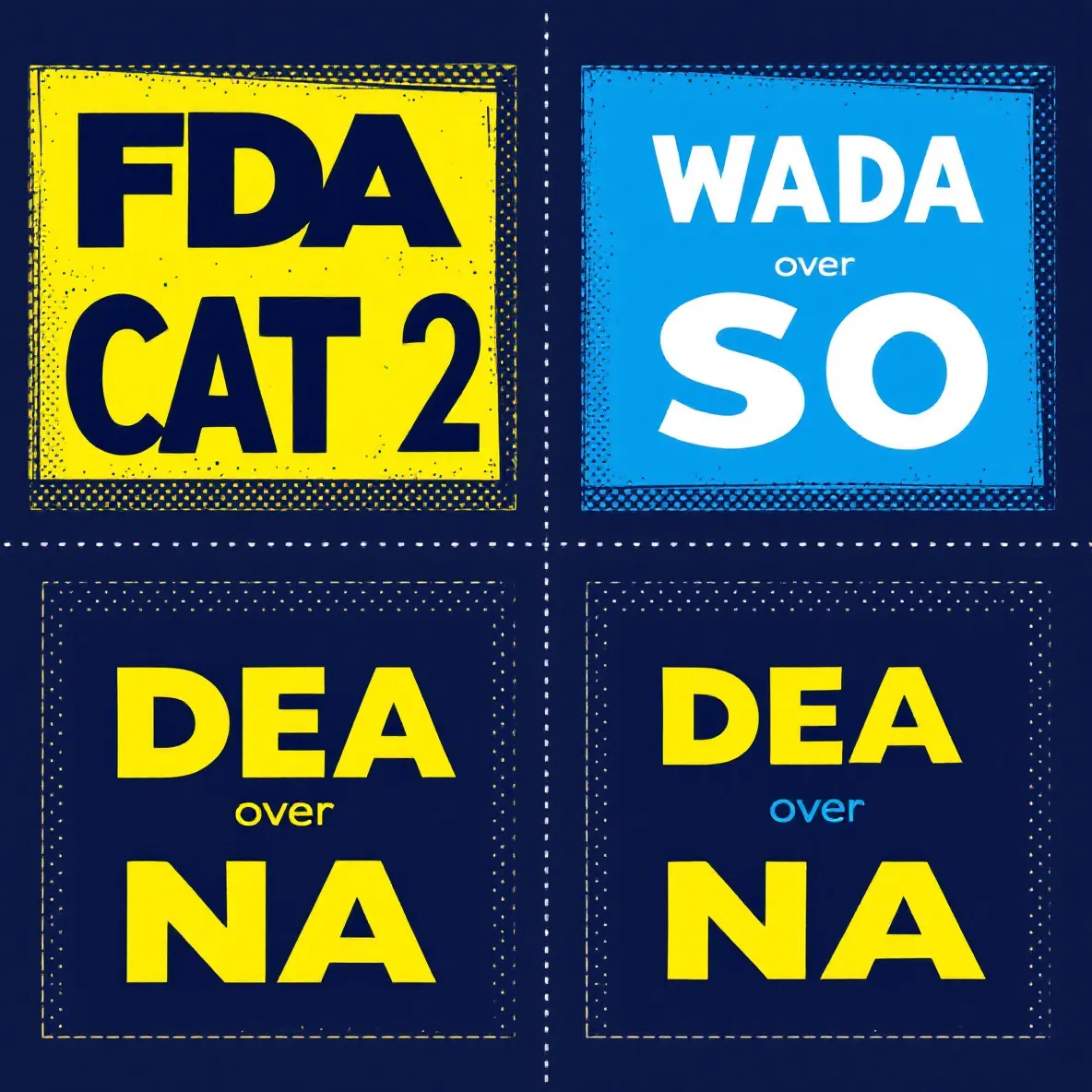
All three descriptions apply to different regulatory dimensions [15]. FDA-approved: No — BPC-157 has no approved indication for any human condition. FDA compounding record: In September 2023 the agency placed BPC-157 in Category 2, but its page dated April 22, 2026 shows it is no longer in that category, lists it under 'Bulk drug substances nominated but withdrawn,' and leaves unanswered whether licensed US pharmacies may produce it. DEA-scheduled (controlled substance): No — BPC-157 is not a DEA-controlled substance; possession is not federally criminalized. WADA-prohibited: Yes — it is listed on the WADA Prohibited List under S0 (Non-Approved Substances) since 2022, banned at all times. EMA/MHRA approved: No. No IND is currently active in the US. The 'gray zone' label reflects the specific combination of legal possession + prohibited compounding + regulatory non-approval + WADA prohibition.
Why did the FDA prohibit BPC-157 from compounding pharmacies in 2023?
The FDA's Category 2 designation under 503A and 503B cites three stated concerns [15]: (1) insufficient human safety data — no substantial evidence from controlled human trials has established that BPC-157 is safe for human use; (2) potential for immune reactions — the FDA identified potential immunogenicity risks that are not adequately characterized by available data; and (3) manufacturing impurity concerns — without the quality controls applied to approved pharmaceutical manufacturing, impurity profiles in compounded BPC-157 products are not reliably characterized. Category 2 is a prohibition, not a 'needs more review' status. Compounding pharmacies licensed under 503A and 503B cannot compound BPC-157 for individual patients under this classification.
What does WADA say about BPC-157, and can athletes get a Therapeutic Use Exemption?
WADA lists BPC-157 under Section S0 of the Prohibited List — 'Non-Approved Substances' — which covers all pharmacological substances not approved by any regulatory authority for human therapeutic use [15]. S0 applies both in-competition and out-of-competition. A Therapeutic Use Exemption (TUE) for BPC-157 is not available: TUEs require that the compound have at least one approved therapeutic indication from a recognized regulatory authority, which BPC-157 does not [15]. USADA has specifically noted that BPC-157 has not been extensively studied in humans and that no safe dose has been established. Athletes subject to WADA or USADA testing face anti-doping rule violations from BPC-157 use regardless of intent or source.
Is BPC-157 a scheduled controlled substance, and is it legal to possess in the US?
BPC-157 is not scheduled under the Controlled Substances Act and is not a DEA-controlled substance as of 2025 [15]. Possession in the United States is not federally criminalized. However, 'legal to possess' is not the same as 'legal to sell.' Sale of BPC-157 as a drug, food, or dietary supplement without FDA approval is unlawful under federal law. The compound exists in a legal gray zone as a 'research chemical' — a category without formal regulatory definition. State-level regulations may differ. The legal status could change if the DEA or FDA takes additional regulatory action, which the 2023 Category 2 FDA classification may signal as an incremental step.
What happened to the Phase II PL 14736 ulcerative colitis trial results?
A Phase II multicenter, randomized, double-blind, placebo-controlled study was conducted in patients with mild-to-moderate ulcerative colitis using BPC-157 formulated as a rectal enema under the designation PL 14736 (Pliva, Croatia) [8]. Phase I in healthy volunteers demonstrated tolerability. The Phase II study was completed, and reports indicated efficacy and no toxicity [8]. However, the full dataset was never published as a standalone peer-reviewed paper — only summary descriptions appear in review articles authored by members of the same research group. Without a peer-reviewed publication, the human efficacy and safety data from this trial cannot be independently evaluated, and the results cannot be cited as evidence-based findings. This gap in the published record is a material limitation of the human clinical evidence for BPC-157.
What is the significance of BPC-157 research being concentrated in one research group?
The large majority of BPC-157's published literature originates from the research group of Predrag Sikiric and Sven Seiwerth at the University of Zagreb [15][16]. This concentration raises a standard scientific concern: findings from a single research group, even when published in peer-reviewed journals, represent a weaker evidence base than findings independently replicated by multiple teams. Independent replication is a cornerstone of scientific validity. The 2025 HSS Journal systematic review and the 2025 Current Reviews in Musculoskeletal Medicine narrative review both note this as a significant limitation [15][16]. It does not mean the Zagreb group's findings are incorrect — it means they remain unconfirmed by independent replication at scale.
Is BPC-157 a naturally occurring compound in the human body?
Partially. BPC-157 is a synthetic peptide whose sequence corresponds to a partial sequence of a protein found in human gastric juice [1][17]. The parent protein is present in the human body; the 15-amino acid fragment BPC-157 is not known to circulate in blood at measurable concentrations. It is accurately described as 'derived from' a gastric protein rather than 'naturally occurring' as an independent molecule. The 2025 Inflammopharmacology commentary describes it as a 'natural pentadecapeptide' in the sense that its sequence is derived from a human protein — but the compound as administered in research is a synthetic product, not an extract [17].
What is BPC-157's legal classification in the US as of 2025?
BPC-157 falls into the following legal categories in the US as of 2025 [15]: (1) Not an FDA-approved drug — no approved indication exists. (2) FDA compounding record — the September 2023 Category 2 placement is historical; the nomination was later withdrawn, and FDA has not published a rule saying whether pharmacies may compound BPC-157 after that withdrawal. (3) Not a DEA Controlled Substance — possession is not federally criminalized. (4) A WADA-prohibited substance (S0) — banned for competitive athletes at all times. (5) Sale as a drug, food, or dietary supplement is unlawful without FDA approval. The combination produces a classification often described as a 'research chemical' — a gray-zone status where possession is legal but production for therapeutic use and sale as a health product are both unlawful under existing frameworks.